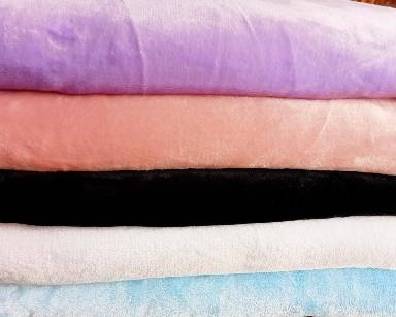
Terry Fabric
.jpg)
Terry Fabric: A Complete Manufacturer Guide to GSM, Fibre Blends, Applications & Sourcing
Terry fabric is one of those materials that most people interact with every day without thinking twice about it. The towel you reach for after a shower, the bathrobe hanging on the back of your door, the gym towel in your bag - all terry. Yet despite its familiarity, it remains one of the most technically varied fabrics in commercial textile production, and one of the most frequently under-specified when buyers are sourcing at scale.
This guide covers Terry fabric from a manufacturer's perspective - what it is, how it is constructed, the GSM ranges that matter for each application, the fibre blends available, and where the fabric delivers its strongest commercial value. Whether you are sourcing for towel production, apparel, home furnishing, or hospitality, the information here will help you specify and source correctly.
What is Terry Fabric?
Terry fabric gets its name from the French word "tirer" - meaning to pull or draw - which refers directly to how the fabric is made. Terry is produced by creating looped piles of yarn on one or both sides of the base fabric. These loops are the defining feature of terry - they are what give the fabric its characteristic texture, softness, and absorbency.
The looped structure creates a significantly higher surface area compared to flat fabrics, which is why terry absorbs moisture so effectively. The denser and longer the loops, the more absorbent and plush the fabric becomes - which is why a high-GSM hotel bath towel feels so different from a lightweight gym towel, even though both are technically terry.
Terry fabric is produced in two primary structural formats. Towel terry has loops on both sides of the fabric, maximising absorbency and bulk - the standard for bath towels, bathrobes, and hospitality linen. French terry has loops on one side only, with a smooth flat surface on the reverse - the format commonly used in apparel such as sweatshirts, joggers, and casual garments where the flat side faces out and the looped side provides warmth and comfort against the skin.
How Terry Fabric Is Manufactured
Terry fabric looks straightforward until you start specifying it. Two rolls at the same GSM from different suppliers can feel and perform entirely differently - and the reason almost always comes down to decisions made during knitting, dyeing, and finishing. Understanding the process helps buyers ask the right questions before placing an order.
Knitting Construction
Knitted terry - which includes the polyester terry range that Maurya Exports produces - is manufactured on circular knitting machines. The knitting process creates the loop structure by allowing certain yarns to form extended loops above the base fabric surface rather than being fully incorporated into the knit structure. The height, density, and consistency of these loops are controlled by the machine settings and directly determine the fabric's final hand feel, absorbency, and weight.
The key quality variable to assess in knitted terry is loop consistency - how uniform the loops are in height and density across the full fabric width. Inconsistent looping shows up as variation in texture and absorbency across a finished product, which is particularly visible in cut-and-sewn items like towels and robes.
GSM: The Most Important Specification Decision in Terry
GSM (grams per square metre) is the most important specification when sourcing terry fabric. It determines weight, absorbency, warmth, and the product's overall quality perception. Terry fabric is commercially available across a wide GSM range - and the right weight depends entirely on the intended end use.
160 to 220 GSM - Lightweight Range: Used for disposable hotel bathroom slippers, lightweight beach pareos, sanitary applications, and thin cleaning cloths. At this weight the fabric is light, quick-drying, and cost-effective. Not suitable for applications where absorbency or warmth is the priority.
220 to 280 GSM - Mid-weight Range: The most commercially versatile range for polyester terry. Covers sportswear towels, beach towels, gym towels, infant clothing, baby hoodies, and light bathrobes. Good balance of absorbency, weight, and cost. Micro polyester terry typically sits within this range.
280 to 350 GSM - Heavyweight Range: Used for premium bath towels, bathrobes, mattress protectors, and hospitality linen. At this weight the fabric has the body, absorbency, and plush feel that consumers and commercial buyers associate with quality. Cotton terry and cotton-polyester blends for towel production typically fall within this range.
A common sourcing mistake is specifying a lower GSM than the application requires to reduce cost - particularly in towel and bathrobe production where the fabric's weight directly affects the product's perceived quality and absorbency performance. Getting the GSM right from the outset is more cost-effective than adjusting after sampling.
Quality Indicators to Evaluate When Sourcing Terry Fabric
Beyond GSM, there are several quality variables that experienced buyers check before committing to bulk volume. Loop evenness across the full fabric width is the primary structural indicator - request a full-width sample rather than a cut swatch, as consistency issues only appear at scale. Colourfastness to washing should be tested before production, particularly for products entering retail channels that require compliance documentation. Pill resistance matters in terry used for apparel and bathrobes - ask your supplier whether anti-pilling finishing is applied. And for polyester terry with moisture-wicking treatment, confirm whether the treatment is lifetime-bonded to the fibre or a surface application that washes out after several cycles - the difference is significant for performance product claims.
Dyeing and Finishing
After knitting, terry goes through dyeing and finishing - and this is where quality differences between suppliers become most apparent to buyers who know what to look for. For polyester terry, disperse dyes are used to achieve colour vibrancy and fastness. The finishing sequence includes softening treatments, and for performance variants, moisture-wicking treatment applied to the fibre. A consistent colour across the full fabric width - no shading or tonal variation from selvedge to selvedge - is a basic but important quality benchmark to verify on samples. Variation here often indicates inconsistent dyeing, and it shows clearly in finished products.
Fibre Blends and Types: Choosing the Right Terry for Your Product
Fibre composition is where most of the meaningful performance differences between terry fabrics originate. The wrong blend for the application is one of the most common and avoidable sourcing mistakes in terry - and it rarely shows up until the product is in use. Here is a straightforward breakdown:
100% Polyester Terry
Produced from 100% polyester yarn, this is the dominant terry variant for sportswear, gym products, beach applications, and pet products. Polyester terry is lightweight, quick-drying, colourfast, and highly durable through repeated machine washing. Maurya Exports produces polyester terry with lifetime moisture-wicking treatment as a value addition - making it particularly suitable for active and sportswear applications where moisture management is as important as absorbency.
Cotton Terry
The classic terry fabric. 100% cotton terry offers outstanding natural absorbency, a soft hand feel, and the breathable comfort that makes it the preferred choice for premium bath towels, bathrobes, baby products, and hospitality linen. One point worth knowing: cotton terry can shrink by 5 to 8% in the first wash if not pre-shrunk during finishing - confirm with your supplier whether the fabric has been pre-shrunk before production, particularly for cut-and-sewn products where dimensional accuracy matters. Beyond that, its natural properties and consumer appeal make it the first choice where absorbency and comfort are the primary requirements.
Cotton-Polyester Blend Terry
Blending cotton with polyester produces a fabric that balances the natural absorbency and softness of cotton with the dimensional stability, durability, and cost-efficiency of polyester. The most common commercial blends are 80% cotton / 20% polyester and 60% cotton / 40% polyester. These blends are widely used in mid-range towels, institutional linen, beach applications, and casual apparel. The polyester component improves resistance to shrinkage and speeds up drying time compared to 100% cotton. One practical note on blend selection: buyers sometimes specify a higher cotton percentage expecting better quality, but beyond 80% cotton the gains in softness are marginal while the shrinkage risk and cost increase meaningfully - 80/20 is the blend most experienced towel manufacturers settle on for good reason.
Mexcool Terry
Mexcool Terry is Maurya Exports' innovative performance terry fabric - engineered specifically for warm-weather and active applications where cooling and moisture management are the priority. Unlike standard terry which retains warmth, Mexcool Terry is designed to wick moisture rapidly and provide a cooling sensation against the skin. It is used in summer sportswear, beach products, and active lifestyle applications where conventional terry would feel too warm. This is a differentiated product not widely available from standard terry manufacturers.
Terry Fabric: Key Applications Across Industries
Terry fabric's combination of absorbency, softness, and durability makes it commercially viable across a wider range of product categories than buyers often initially consider.
Towels and Bath Products: The primary and most established application. Bath towels, hand towels, face cloths, beach towels, and kitchen towels are all standard terry applications. GSM selection is critical here - lightweight travel towels typically specify 160 to 180 GSM, household bath towels work at 220 to 260 GSM, and premium luxury towels move toward 280 to 350 GSM. Fabric width and loop density should also be specified clearly to ensure consistent production quality.
Bathrobes and Loungewear: Terry bathrobes are a high-value product in both retail and hospitality markets. Cotton terry and cotton-polyester blends at 220 to 280 GSM are the standard specification for bathrobes. The dual-loop surface provides the warmth, absorbency, and plush comfort that consumers associate with premium bathrobes. Polyester terry at lower GSM is used for lightweight travel robes and promotional hospitality robes.
Sportswear and Activewear: Polyester terry - particularly micro terry and Mexcool Terry variants - is widely used in gym towels, sports towels, sweat bands, and active lifestyle accessories. The quick-drying properties and moisture-wicking performance of polyester terry make it the practical choice for high-use active applications. French terry construction is standard for sweatshirts, joggers, and casual sportswear garments.
Baby and Infant Products: Cotton terry's natural absorbency and gentle hand feel make it the preferred material for baby hoodies, infant robes, swaddle wraps, and baby bath products. For products entering retail channels in the EU, US, or Australia, confirming compliance with relevant safety and colourfastness standards should be part of the sourcing specification.
Medical and Hygiene Products: Due to its soft surface, moisture absorption capabilities, and skin-friendly comfort, certain terry fabric constructions are also used in reusable diapers, sanitary pads, nursing pads, absorbent healthcare textiles, and personal hygiene products. The suitability depends on fibre composition, absorbency requirements, and product design specifications. Lightweight and mid-weight terry fabrics are commonly selected where moisture management and user comfort are important.
Hospitality and Institutional Linen: Hotels, spas, resorts, and healthcare facilities are major commercial buyers of terry fabric. Cotton-polyester blends at 220 to 260 GSM are the industry standard for institutional applications - offering the durability to withstand commercial washing at high temperatures while maintaining acceptable absorbency and feel. Polyester terry is used for disposable hotel bathroom slippers and single-use applications where cost-efficiency is the priority. One consideration often overlooked by buyers entering the hospitality market for the first time: institutional terry needs to maintain its appearance and absorbency through 50 to 100 wash cycles at temperatures above 60 degrees - a specification that eliminates many standard consumer-grade fabrics from consideration.
Mattress Protectors: Single-side terry - with the looped surface providing softness against the body and the flat reverse bonded or laminated to a waterproof backing - is a standard material for mattress protectors. Terry laminated fabric, which combines terry's softness with waterproof lamination, is specifically produced for this application.
Pet Products: Polyester terry is widely used in pet towels, pet blankets, and grooming products. Its durability through repeated washing, quick-drying properties, and soft surface make it practically suited for this growing product category.
Beach and Travel Products: Pareos, sarongs, beach towels, and travel towels are established markets for lightweight polyester terry and micro terry. The combination of quick-drying properties, colour vibrancy, and light weight makes polyester terry the preferred choice for beach and travel applications where portability matters.
Terry Fabric vs French Terry vs Fleece: A Practical Comparison for Buyers
These three fabric categories are frequently compared during product development and sourcing. Each has a distinct construction, performance profile, and commercial role - understanding where each fits simplifies specification decisions significantly.
| Feature | Terry Fabric | French Terry | Fleece Fabric |
|---|---|---|---|
| Construction | Loops on both sides | Loops on one side, smooth flat reverse | Napped or brushed surface on both sides |
| Absorbency | High | Medium | Low |
| Warmth | Medium | Medium to High | High |
| Typical GSM Range | 160 to 350 GSM | 200 to 320 GSM | 150 to 450 GSM |
| Towel and Bath Use | Primary application | Not suitable | Not suitable |
| Apparel Use | Bathrobes, casual wear | Sweatshirts, joggers, casual garments | Jackets, hoodies, outerwear |
| Sportswear Use | Gym towels, sports towels | Casual sportswear, sweatshirts | Activewear, performance outerwear |
| Primary B2B Markets | Hospitality, home textile, baby products | Apparel brands, casual wear manufacturers | Outerwear, blankets, home furnishing |
In practice, sourcing teams working across product categories often specify all three fabrics for different applications within the same range - terry for bath and beach products, French terry for casual apparel, and fleece for outerwear and blankets. Understanding the structural differences between them prevents misspecification and avoids costly sampling corrections.
Terry Fabric Care and Washing Guide
Proper care is essential to maintaining terry fabric's loop structure, absorbency, and softness through repeated use and washing. The correct care procedure varies by fibre composition.
Polyester Terry: Machine wash in cold water on a gentle cycle using a mild detergent. Avoid fabric softeners - they coat the polyester fibres and reduce moisture-wicking performance over time. Air-dry or tumble dry on low heat. Polyester terry is generally quick-drying and recovers well from machine washing without significant shrinkage.
Cotton Terry: Machine wash in warm water using a gentle detergent. Shake items out before transferring to the dryer to help restore pile loft. Tumble dry on low heat or air-dry. Avoid fabric softeners in the long term - while they provide initial softness, regular use gradually reduces cotton terry's natural absorbency by coating the fibre surface.
Cotton-Polyester Blend Terry: Machine wash in cold or warm water depending on the cotton content. A mild detergent is suitable. Tumble dry on low heat or air-dry. Avoid excessive heat which can cause the polyester component to retain odours and the cotton component to shrink.
A practical note for product developers and buyers: fabric softener is the most common cause of long-term absorbency reduction in terry products. Care label guidance should specifically address this - particularly for bath towels, robes, and sports products where absorbency is a key performance requirement.
Sourcing Terry Fabric from Maurya Exports
At Maurya Exports, we manufacture and supply Terry fabric across multiple fibre compositions - including 100% Polyester Terry, Cotton Terry, Cotton-Polyester Blend Terry, and our exclusive Mexcool Terry - to meet the requirements of towel manufacturers, apparel producers, hospitality buyers, and home textile brands at commercial scale.
Our Terry fabric is available in a GSM range of 160 to 350 GSM across standard and custom widths, with dyeing and finishing to meet international quality standards. We support bulk orders with consistent quality across batches, provide sampling ahead of production commitment, and work directly with sourcing teams on specification requirements. For first-time orders, we recommend requesting a full-width sample across your target GSM before committing to production volume - loop consistency and colour fastness are best evaluated on a wider sample than a standard cut swatch.
Contact our team to discuss your Terry fabric requirements or explore our Terry fabric range directly.
Conclusion
Terry fabric has held its commercial position across industries for good reason. It is not a trend-driven material - it is a functional one, and function is what keeps it in consistent demand across towel manufacturing, apparel, hospitality, baby products, and home textiles simultaneously.
For sourcing professionals and product developers, the work is in the specification. The right GSM, the right fibre blend, and a supplier who understands your production requirements rather than just filling an order - those three decisions determine whether the final product performs as expected or requires costly rework. Terry is dependable when specified correctly. When it is not, the problems show up in absorbency, pile degradation, and shrinkage - all of which are avoidable with the right upfront decisions.
If you are evaluating Terry fabric for a new product line or reviewing your current supplier, explore our range or get in touch directly. We are equipped to assist with specification, sampling, and bulk production across all our terry variants.
Frequently Asked Questions About Terry Fabric
What is Terry fabric made of?
Terry fabric is produced from a range of fibre compositions depending on the intended application. 100% polyester terry is common for sportswear and beach products. Cotton terry is the standard for premium towels, bathrobes, and baby products. Cotton-polyester blends at 80/20 or 60/40 are widely used for mid-range towel and institutional linen production.
What is the GSM range for Terry fabric?
Terry fabric is commercially available from approximately 160 GSM to 350 GSM. Lightweight terry (160 to 220 GSM) suits travel towels, beach applications, and sportswear products. Mid-weight (220 to 280 GSM) covers bath towels, bathrobes, and infant products. Heavyweight (280 to 350 GSM) is standard for premium bath towels, luxury bathrobes, and hospitality linen. The right GSM depends entirely on the end product's absorbency and weight requirements.
What is the difference between Terry fabric and French Terry?
Standard terry fabric has loops on both sides of the fabric, maximising absorbency and bulk - used primarily for towels, robes, and bath products. French terry has loops on one side only, with a smooth flat surface on the reverse - used in apparel such as sweatshirts, joggers, and casual garments where the smooth side is worn outward and the loops provide warmth and comfort on the inside.
What is Mexcool Terry?
Mexcool Terry is an innovative performance terry fabric developed by Maurya Exports specifically for warm-weather and active applications. Unlike standard terry which retains warmth, Mexcool Terry is engineered to wick moisture rapidly and provide a cooling sensation against the skin - making it suitable for summer sportswear, beach products, and active lifestyle applications where conventional terry would feel too warm.
How should Terry fabric be washed?
Polyester terry: cold water, gentle cycle, mild detergent, air-dry or low-heat tumble dry. Cotton terry: warm water, gentle detergent, low-heat tumble dry. Avoid fabric softeners for all terry variants as they reduce absorbency and moisture-wicking performance over time.
What are the main commercial applications for Terry fabric?
Bath towels, beach towels, bathrobes, gym towels, sportswear, mattress protectors, baby products, hospitality linen, pet towels, pareos, and home furnishing products. Terry is one of the most commercially versatile knitted fabrics available across both consumer and B2B markets.
Is Terry fabric available for bulk sourcing from India?
Yes. India is an established production base for terry fabric, with manufacturers offering flexibility in GSM, fibre composition, width, and colour. Indian terry fabric is exported to buyers across the US, Europe, Australia, and the Middle East for towel production, apparel manufacturing, and home textile applications.
What MOQ is typical for bulk Terry fabric orders?
MOQ varies depending on fibre composition, GSM, and colour specification. Standard commercial orders typically begin at 500 to 1000 kg per colour per specification. Sampling is generally available ahead of bulk commitment - confirm requirements and lead times with your supplier during initial enquiry.
Written by the Product and Sourcing Team at Maurya Exports
.jpg)
.jpg)