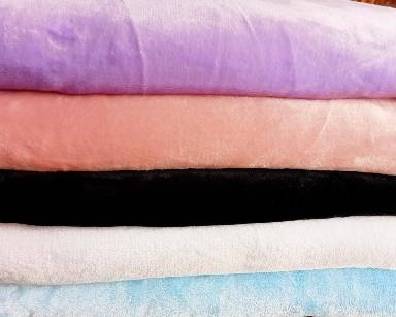
Cotton Anti-Pilling Fleece Fabric
.png)
Cotton Anti-Pilling Fleece Fabric: A Complete Manufacturer Guide to GSM, Types, Applications & Sourcing
Cotton anti-pilling fleece fabric refers to a knitted fleece fabric built from a cotton-polyester blend and finished to resist pilling - the small fuzzy balls that form on fabric surfaces from friction and repeated washing. In commercial production, "cotton anti-pilling fleece" almost never means 100% cotton. Pure cotton fleece pills heavily on its own because cotton's short staple fibres work loose from the yarn structure easily. The fabric buyers are actually looking for when they ask for cotton anti-pilling fleece is a polyester-cotton blend - enough cotton to deliver softness and breathability, enough polyester to control pilling and hold the fabric's shape through repeated washing.
This guide covers how cotton-blend anti-pilling fleece is constructed, what the anti-pilling finish actually does at a fibre level, the GSM range that matters for different applications, the mistakes we see buyers make most often when sourcing this fabric, and where it delivers genuine commercial value over both 100% polyester fleece and unfinished cotton fleece.
What is Cotton Anti-Pilling Fleece Fabric?
At its core, this is a knitted fleece fabric - brushed on the back face for warmth and softness - made from a cotton-polyester blend and then put through a finishing process specifically designed to stop pills from forming. The blend ratio is the first decision point: a higher cotton content gives a softer, more breathable fabric closer to natural cotton fleece, while a higher polyester content improves pilling resistance, colour retention, and dimensional stability. Most commercial cotton anti-pilling fleece sits in the 45 to 60% cotton range blended with polyester, often using recycled polyester as the synthetic component to support sustainability positioning.
The "anti-pilling" part of the name refers to a finishing treatment applied after knitting and dyeing, not a different fibre. Without this finishing step, a cotton-polyester fleece blend will still pill under normal wear - the anti-pilling process is what determines whether the fabric stays smooth-looking after repeated washing or starts showing fuzz balls within a few wears.
How Cotton Anti-Pilling Fleece Is Manufactured
The fabric starts as a knitted base - typically a single or double-knit fleece construction using cotton-polyester blended yarn. After knitting, the fabric goes through brushing to raise the soft fleece nap on the back face, the same brushing principle used for flannel and Sherpa, but applied to a flatter cotton-blend base rather than a pure polyester pile structure.
The anti-pilling treatment is applied as a separate finishing step, and there are a few different methods used depending on the blend ratio and target market:
Enzyme (Biopolishing) Treatment: Cellulase enzymes are applied to break down and remove the short, loose cotton fibre ends that protrude from the yarn surface and eventually tangle into pills. This is one of the most common anti-pilling treatments specifically for cotton-blend fabrics, since it targets cotton's natural tendency to shed short fibres. It also leaves the fabric feeling smoother and slightly glossier than untreated cotton fleece.
Singeing and Shearing: The fabric surface is passed close to a controlled flame or sheared mechanically to burn off or trim loose surface fibres before they have a chance to pill. This is typically done before dyeing and is a standard step in most commercial fleece finishing, cotton-blend or otherwise.
Resin or Silicone Finishing: A polymer-based finish is applied to bind loose fibre ends to the yarn surface, reducing the friction that causes fibres to work loose and tangle. This adds a degree of permanence to the anti-pilling effect that purely mechanical treatments like singeing don't provide on their own.
In practice, most commercial cotton-blend anti-pilling fleece uses a combination of these - mechanical finishing during processing plus an enzyme or resin treatment for lasting pilling resistance. Buyers evaluating a new supplier should ask which combination is used, since enzyme-only treatments tend to soften over very high wash counts, while resin-finished fabric holds its anti-pilling performance longer but can feel marginally stiffer at first.
GSM: Matching Weight to the Right Application
At Maurya Exports, our cotton anti-pilling fleece (PC Polar Antipilling Fleece Melange) is produced across a working range of 300 to 400 GSM. This is a deliberately mid-to-heavyweight range, and it reflects how this fabric is actually used commercially - cotton-blend anti-pilling fleece is rarely specified as a lightweight summer fabric. It's a cold-weather, structured fleece used where softness and a settled, non-pilling surface both matter.
300 to 340 GSM: The lighter end of our range, suited to sweatshirts, hoodies, and apparel where the fabric needs body and warmth without becoming too heavy for layered wear.
340 to 380 GSM: The most commonly ordered mid-range for jackets, joggers, and structured loungewear, where the fabric needs to hold its shape through repeated wear and washing without losing the soft cotton-blend handfeel.
380 to 400 GSM: The heavier end of our range, used for premium outerwear panels and home textile applications where a denser, more substantial fleece is the priority.
One thing worth flagging to buyers new to this fabric category: GSM alone doesn't tell you how the fabric will perform against pilling. A 400 GSM cotton-blend fleece with a weak anti-pilling finish will still pill faster than a well-finished 320 GSM fabric. Weight tells you about warmth and body; the finishing process tells you about how the fabric will look after six months of regular washing.
Fibre Blend and Composition
The blend ratio is the single biggest factor in how this fabric performs and feels. At Maurya Exports, our cotton anti-pilling fleece (melange range) is produced from 55% recycled polyester and 45% cotton - a ratio chosen specifically to balance softness against pilling resistance and durability.
This blend gives buyers a few practical advantages over either pure fibre. The cotton content delivers a genuinely soft, breathable handfeel that 100% polyester fleece can't fully replicate, while the polyester majority keeps the fabric dimensionally stable, resistant to shrinkage, and considerably more pilling-resistant than a higher-cotton blend would be. Using recycled polyester as the synthetic component also supports sustainability positioning for brands sourcing fabric for eco-conscious product lines, without compromising the fabric's performance.
Buyers should be specific about blend ratio when sourcing, since "cotton anti-pilling fleece" can mean anything from a cotton-dominant blend with weaker pilling resistance to a polyester-dominant blend that prioritises durability over softness. Confirm the exact composition on the spec sheet rather than assuming based on the product name alone.
Design Range: Melange Shades and Surface Finish
Cotton-polyester anti-pilling fleece is most commonly produced in melange shades - a heathered, multi-tone yarn effect created by blending differently coloured fibres before spinning, rather than dyeing a solid shade afterward. Melange gives the fabric a textured, slightly heathered appearance that reads as more premium and less "flat" than solid-dyed fleece, which is part of why it's the standard presentation for this fabric category in apparel. Solid shades are also available where a brand's design brief calls for a flat, uniform colour rather than a heathered look.
The back face is typically brushed for softness, while the face side is left smoother - a single-sided fleece construction that suits garment applications where one side faces out and the brushed side sits against the skin.
Common Buyer Mistakes When Sourcing Cotton Anti-Pilling Fleece
We see a fairly consistent set of mistakes from buyers new to this fabric category, almost always avoidable with one or two extra questions before placing the order.
Choosing GSM without evaluating anti-pilling performance. As covered above, GSM tells you weight and body, not how the fabric will hold up against pilling. Buyers sometimes assume a heavier fabric is automatically a better fabric and skip evaluating the actual finish - this is backwards. Always ask what anti-pilling treatment is used and request a wash-tested sample before judging the fabric on GSM alone.
Assuming all anti-pilling finishes perform the same. Enzyme treatment, resin finishing, and mechanical singeing all produce different long-term results. An enzyme-only finish can soften in effectiveness after very high wash counts, while a resin finish holds up longer but feels slightly different to the touch initially. Don't treat "anti-pilling" as a single fixed specification - ask which method is used and what it means for the product's wash life.
Ignoring blend ratio. A 70% cotton blend and a 40% cotton blend can both be sold as "cotton anti-pilling fleece," but they perform very differently - the higher-cotton version will feel softer but pill more readily, even with finishing applied. Always confirm the exact percentage split rather than assuming based on the product name.
Approving samples without wash testing. A fabric that looks smooth and pill-free on the unwashed roll can tell you almost nothing about how it will perform after five or ten home washes, which is the real test most end products will face. Always request a sample that's been through multiple wash cycles before signing off on bulk production - this is the single most reliable way to catch a weak anti-pilling finish before it becomes a customer complaint.
Focusing only on price. The cheapest cotton-blend anti-pilling fleece quote is usually cheaper because either the cotton percentage is lower than advertised, or the anti-pilling finish has been applied lightly to cut cost. Compare actual wash-tested samples side by side rather than comparing price per kilo on a spec sheet.
Not confirming shrinkage specifications. The cotton content in this blend carries more shrink risk than a 100% polyester fleece, particularly if the fabric hasn't been pre-shrunk during finishing. For cut-and-sewn orders where sizing accuracy matters, confirm pre-shrinking with your supplier and check the shrinkage percentage on the test report before committing to bulk.
Cotton Anti-Pilling Fleece vs 100% Polyester Anti-Pilling Fleece: A Practical Comparison for Buyers
This is the comparison most buyers actually need to make, since both fabrics serve overlapping apparel categories but perform differently:
| Feature | Cotton Anti-Pilling Fleece (PC Blend) | 100% Polyester Anti-Pilling Fleece |
|---|---|---|
| Hand Feel | Softer, more breathable, natural cotton touch | Smooth, slightly synthetic feel, less breathable |
| GSM Range | 300 to 400 GSM | 160 to 450 GSM |
| Pilling Resistance | Good, with enzyme/resin finishing applied | Very high - polyester's smooth, continuous filament resists pilling inherently |
| Shrinkage | Low to moderate - cotton content adds some shrink risk if not pre-shrunk | Very low |
| Best Applications | Premium sweatshirts, hoodies, loungewear positioned on comfort | Budget-to-mid apparel, activewear, blankets, high-wash institutional use |
| Price Point | Mid to premium | Economy to mid |
Buyer guidance: Choose Cotton-blend anti-pilling fleece when softness and a natural-fibre handfeel are part of the product's value proposition - premium loungewear, comfort-led hoodies, and apparel marketed on breathability. Choose 100% polyester anti-pilling fleece when the product will face heavy, frequent washing and pilling resistance matters more than natural fibre content - this is generally the more durable option for high-volume, high-wash use cases.
Cotton Anti-Pilling Fleece vs French Terry: A Practical Comparison for Buyers
This comparison comes up often with buyers sourcing for sweatshirts, joggers, and casual apparel, since both fabrics serve the same general garment categories but feel and perform quite differently on the body.
| Feature | Cotton Anti-Pilling Fleece | French Terry |
|---|---|---|
| Warmth | Medium to High - brushed back traps air for genuine insulation | Low to Medium - looped backing is warmer than jersey but lighter than fleece |
| Breathability | Moderate - brushed surface and density limit airflow somewhat | Higher - looped backing structure allows more airflow |
| Surface Construction | Brushed, napped back face on a fleece knit base | Looped backing on one side, smooth flat face on the other |
| Weight | Heavier - typically 300 to 400 GSM | Lighter - typically 200 to 320 GSM |
| Comfort | Plush, cozy, best for cold-weather wear | Soft, breathable, better suited to year-round and warmer-climate wear |
| Best Applications | Hoodies, jackets, cold-weather loungewear, structured sweatshirts | Sweatshirts, joggers, casual wear for milder climates, year-round apparel |
Buyer guidance: Choose cotton anti-pilling fleece when the product needs genuine warmth and a plush, brushed handfeel - cold-climate hoodies, structured jackets, winter loungewear. Choose French Terry when the brief calls for a lighter, more breathable fabric that still has some structure - year-round sweatshirts, joggers for milder climates, or apparel where comfort across a wider temperature range matters more than maximum warmth. Some brands run both within the same collection - cotton anti-pilling fleece for the cold-weather SKUs, French Terry for the transitional-season versions of the same garment.
Commercial Applications: Where Cotton Anti-Pilling Fleece Adds Genuine Value
Sweatshirts and Hoodies: The strongest application for this fabric. The cotton-blend softness suits direct skin contact, and the anti-pilling finish keeps the fabric looking new through the repeated washing that sweatshirts and hoodies typically see.
Loungewear and Casual Apparel: Joggers, casual jackets, and loungewear sets benefit from the soft handfeel and structured weight of mid-range GSM (340 to 380), where the fabric holds its shape without feeling stiff.
Premium Apparel Lines: Brands positioning a product around comfort and natural-fibre softness specifically choose cotton-blend anti-pilling fleece over 100% polyester, since the cotton content is a genuine point of differentiation buyers can market against synthetic-only competitors.
Children's Apparel: The softer handfeel and breathability of the cotton-polyester blend make this fabric a practical choice for kids' sweatshirts and loungewear, where comfort against sensitive skin is a higher priority than maximum durability.
Home Textile Applications: At the heavier end of the GSM range, cotton-blend anti-pilling fleece is also used for throws and soft furnishing pieces where a textured, melange-finish fabric adds a premium look over flat-dyed alternatives.
Cotton Anti-Pilling Fleece Care and Washing Guide
Machine wash cold to warm, gentle cycle. The cotton content in the blend can shrink slightly with hot water, so cold to warm is the safer recommendation for retail care labels.
Mild detergent only. Avoid bleach. Bleach degrades both the cotton fibre and the anti-pilling finish over time.
Use fabric softener sparingly. A small amount is generally fine for cotton-blend fleece, unlike 100% polyester pile fabrics, but heavy or repeated softener use can still reduce the longevity of resin-based anti-pilling finishes.
Turn garments inside out before washing. This reduces surface friction against other items in the wash, which is one of the most effective practical steps for extending pilling resistance regardless of how the fabric was finished.
Tumble dry on low or air-dry. High heat accelerates shrinkage in the cotton component and can affect the anti-pilling finish over repeated cycles.
Sourcing Cotton Anti-Pilling Fleece from Maurya Exports
At Maurya Exports, we manufacture and supply Cotton Anti-Pilling Fleece (PC Polar Antipilling Fleece Melange) in a 55% recycled polyester / 45% cotton blend, brushed back construction, across a working GSM range of 300 to 400. The melange range is available in multiple shade options, with anti-pilling finishing built into our standard production process for consistent performance across batches.
We also manufacture 100% Polyester Anti-Pilling Fleece, Sherpa, and Flannel Fabric, so if your product range needs more than one fleece or pile fabric type, we can usually consolidate sourcing across a single supplier. We support sampling ahead of production commitment - including wash-tested samples on request, which we'd recommend for any first order on this fabric - and work directly with sourcing teams on blend ratio, GSM, and finishing specifications.
Contact our team to discuss your Cotton Anti-Pilling Fleece requirements or explore our Fleece Fabric range directly.
Conclusion
Cotton anti-pilling fleece earns its place in apparel sourcing by solving a real trade-off: cotton alone feels soft but pills quickly, while 100% polyester resists pilling but doesn't deliver the same natural handfeel. A well-finished polyester-cotton blend, with proper anti-pilling treatment built into the production process rather than added as an afterthought, gives buyers a fabric that holds its appearance through genuine repeated use while still feeling like a natural-fibre product against the skin.
For sourcing professionals, the work is in confirming blend ratio and finishing method rather than assuming "anti-pilling" on a spec sheet guarantees performance. A fabric that pills within a few washes despite being labelled anti-pilling is almost always a finishing problem, not a fundamental flaw in the cotton-polyester blend concept itself. Buyers who request a wash-tested sample and confirm shrinkage and blend ratio upfront rarely run into surprises after the order ships.
Frequently Asked Questions About Cotton Anti-Pilling Fleece Fabric
Is Cotton Anti-Pilling Fleece 100% cotton?
No. Commercially produced cotton anti-pilling fleece is almost always a polyester-cotton blend, typically with polyester as the majority fibre. 100% cotton fleece pills heavily on its own, which is why the anti-pilling category is built around blended fabric rather than pure cotton.
What GSM range is standard for Cotton Anti-Pilling Fleece?
Commercial cotton-blend anti-pilling fleece typically runs from 300 to 400 GSM. The lighter end suits sweatshirts and hoodies, the mid-range covers most jackets and structured loungewear, and the heavier end is used for premium outerwear panels and home textile applications.
What is the difference between Cotton Anti-Pilling Fleece and regular Polyester Anti-Pilling Fleece?
Cotton-blend anti-pilling fleece contains a meaningful percentage of cotton fibre, giving it a softer, more breathable handfeel, but slightly lower pilling resistance than 100% polyester fleece. Polyester anti-pilling fleece resists pilling more inherently due to its continuous filament structure, but doesn't replicate cotton's natural softness as closely.
Does Cotton Anti-Pilling Fleece shrink?
It can shrink slightly more than 100% polyester fleece due to the cotton content, particularly if washed in hot water or dried on high heat. Cold to warm water washing and low-heat drying minimise this. Confirm with your supplier whether the fabric has been pre-shrunk during finishing for cut-and-sewn orders where dimensional accuracy matters.
How does the anti-pilling finish actually work?
Anti-pilling finishing combines mechanical processes like singeing and shearing, which remove loose surface fibre before it can pill, with chemical treatments like enzyme (cellulase) biopolishing or resin finishing, which break down or bind loose fibre ends so they can't tangle into pills. Most commercial cotton-blend anti-pilling fleece uses a combination of both for lasting performance.
What products is Cotton Anti-Pilling Fleece most commonly used for?
Sweatshirts, hoodies, joggers, loungewear, children's apparel, and premium casual wear where a soft, natural-fibre handfeel is part of the product's appeal. It's also used in home textile throws at the heavier end of the GSM range.
Can Cotton Anti-Pilling Fleece be sourced in bulk from India?
Yes. India is an established manufacturing base for polyester-cotton blend fleece fabrics, with suppliers offering flexibility in blend ratio, GSM, and colour, including melange and solid shade options. Indian cotton-blend fleece is exported to buyers across the US, Europe, Australia, and the Middle East for apparel and home textile production.
Can Cotton Anti-Pilling Fleece be customised in GSM and colour?
Yes. GSM can be adjusted within our working range (300 to 400) to match your product's weight requirements, and colour is available in both melange shades and solid dyed options. For custom colours, expect to go through a lab dip approval process before bulk production, and for custom GSM outside our standard range, raise this at the enquiry stage since it may affect minimum order quantity and lead time.
What MOQ is typical for bulk Cotton Anti-Pilling Fleece orders?
MOQ varies depending on GSM, blend ratio, and colour/shade complexity. Sampling is generally available ahead of bulk commitment - confirm MOQ and lead times with your supplier during initial enquiry.
Written by the Product and Sourcing Team at Maurya Exports
.jpg)
.jpg)